Why Your Recharge Business Needs Automation?
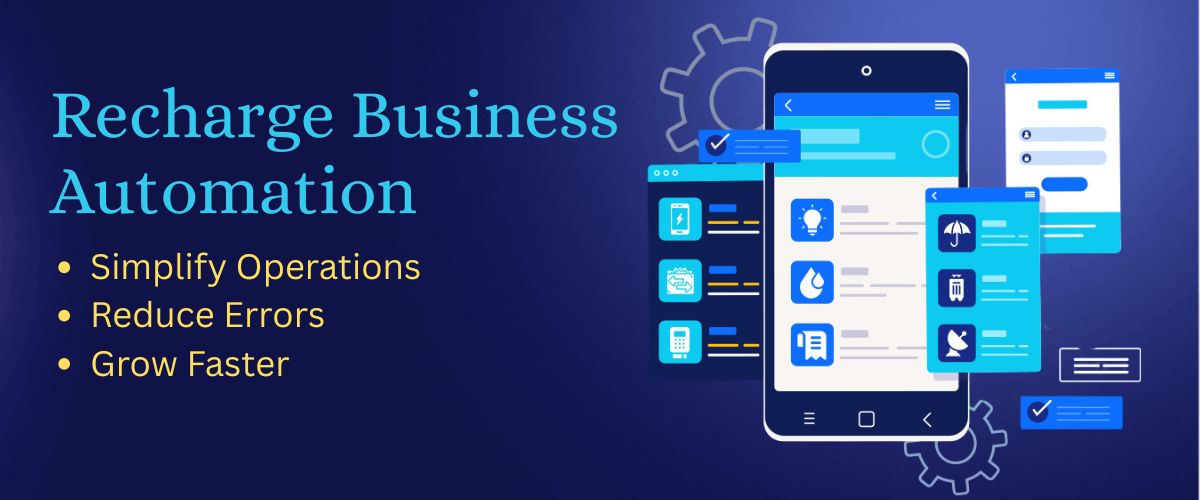
The recharge industry in India has grown very fast in the last few years. Today, people prefer doing mobile recharges, DTH recharges, and bill payments online instead of visiting physical stores. Because of this shift, recharge businesses now handle a large number of transactions every day.
Managing all these transactions manually can become difficult. Many recharge businesses still use spreadsheets or basic systems to manage retailer payments, commissions, and transaction records. Over time, this manual process starts creating problems like delayed transactions, wrong entries, and sometimes even loss of revenue.
This is where automation becomes important. With the help of mobile recharge software, businesses can manage their transactions, retailer network, and reports from a single dashboard. Automated systems help recharge businesses run smoothly while handling a large number of transactions without errors.
Reducing Revenue Loss with Automated Systems
One common issue in the recharge business is revenue loss due to transaction errors or poor data management. When everything is handled manually, mistakes are bound to happen.
Some common problems in manual systems include:
- Duplicate transactions
- Missing transaction confirmations
- Incorrect commission calculations
- Delayed wallet balance updates
Automation helps solve these issues by processing transactions automatically and keeping records updated in real time. This reduces the chances of mistakes and improves overall efficiency.
According to industry reports, businesses that move to automated systems can recover up to 20% of revenue that was earlier lost due to operational errors or delays.
Preventing Transaction Failures
Recharge transactions may sometimes fail due to network issues, wrong operator selection, or insufficient wallet balance. If these issues are not handled properly, they can affect customer trust.
Modern recharge systems use smart technology through a mobile recharge API that automatically retries a failed transaction. If the first attempt fails, the system can try again after a short delay.
This automated retry system improves the overall transaction success rate and provides a better experience for both retailers and customers.
Better Reporting and Financial Management
Running a recharge business means keeping track of many things at once. Some of the key areas include:
- Retailer commissions
- Wallet balances
- Transaction records
- Operator reports
When these tasks are handled manually, there is always a chance of mistakes.
Automated systems provide a dashboard where all this information is available in real time. Business owners can easily monitor transactions, track commissions, and generate reports without spending hours on manual calculations.
Faster Cash Flow with Instant Transaction Tracking
In many businesses, reconciling transactions and payments manually can take a lot of time. Sometimes it may take hours or even days to match transactions with payments.
Automation makes this process much faster. Every transaction is recorded instantly and wallet balances are updated automatically. This gives business owners a clear view of their cash flow at any time.
In fact, businesses using automated systems often save 15–20 hours of manual work every week, especially when they handle large numbers of transactions.
Read Also: How to Start Mobile Recharge Business?
Improving Customer Experience
In the recharge business, customer experience plays a very important role. Users expect their recharge to be completed quickly and without any issues.
Automation helps improve service quality by offering:
- Instant recharge processing
- Real-time transaction updates
- Automatic notifications and confirmations
- Easy management tools for retailers
When transactions are processed quickly and accurately, customers feel more confident using the service and are more likely to return again.
Growing Your Recharge Business Easily
As your recharge business grows, the number of retailers and transactions also increases. Managing everything manually becomes very difficult at that stage.
Automation helps businesses scale without increasing operational pressure. With centralized dashboards and automated processes, businesses can manage a large retailer network and handle thousands of transactions efficiently.
This allows a recharge business to grow from a small setup into a much larger distribution network without hiring a large operations team.
Automating Retailer and Distributor Management
Recharge businesses often operate through a multi-level structure:
Admin
↓
Master Distributor
↓
Distributor
↓
Retailer
Automation simplifies this hierarchy by allowing the admin to manage all users through a centralized mobile recharge software dashboard.
The system automatically handles:
- Commission distribution
- Wallet transfers
- Transaction reports
- User management
Through integrated mobile recharge API services, each retailer can process recharges directly from their dashboard with real-time confirmation.
Using Data to Grow Your Business
Another advantage of automation is the ability to track business data easily.
With proper transaction records, businesses can monitor important metrics like:
- Monthly transaction volume
- Retailer activity
- Revenue growth
- Transaction success rates
These insights help business owners understand which areas are performing well and where improvements are needed. Over time, this data can help businesses make better decisions and plan future growth.
Conclusion
The recharge industry is growing rapidly, and businesses need modern systems to keep up with the increasing demand. Manual processes may work in the beginning, but they often lead to errors, delays, and operational challenges as the business grows.
Automation helps recharge businesses run more efficiently, reduce revenue loss, and provide faster services to customers and retailers.
By adopting reliable digital tools, businesses can build a scalable recharge platform that supports long-term growth and smooth operations.
Frequently Asked Questions (FAQs)
1. Why is automation important in a recharge business?
Automation helps recharge businesses handle transactions faster, reduce manual errors, and manage large retailer networks more efficiently. It also improves transaction success rates and overall business operations.
2. Can a recharge business run without automation?
A recharge business can start with manual systems, but as the number of transactions grows, managing everything manually becomes difficult. Automation helps businesses scale and maintain accurate records.
3. What are the benefits of automated recharge systems?
Automated recharge systems offer several benefits, including:
- Faster transaction processing
- Real-time reporting and monitoring
- Reduced operational errors
- Better retailer and distributor management
- Improved customer experience